

Creating a Cozy Reading Nook in a Small Space: A Guide to Your Curated Sanctuary
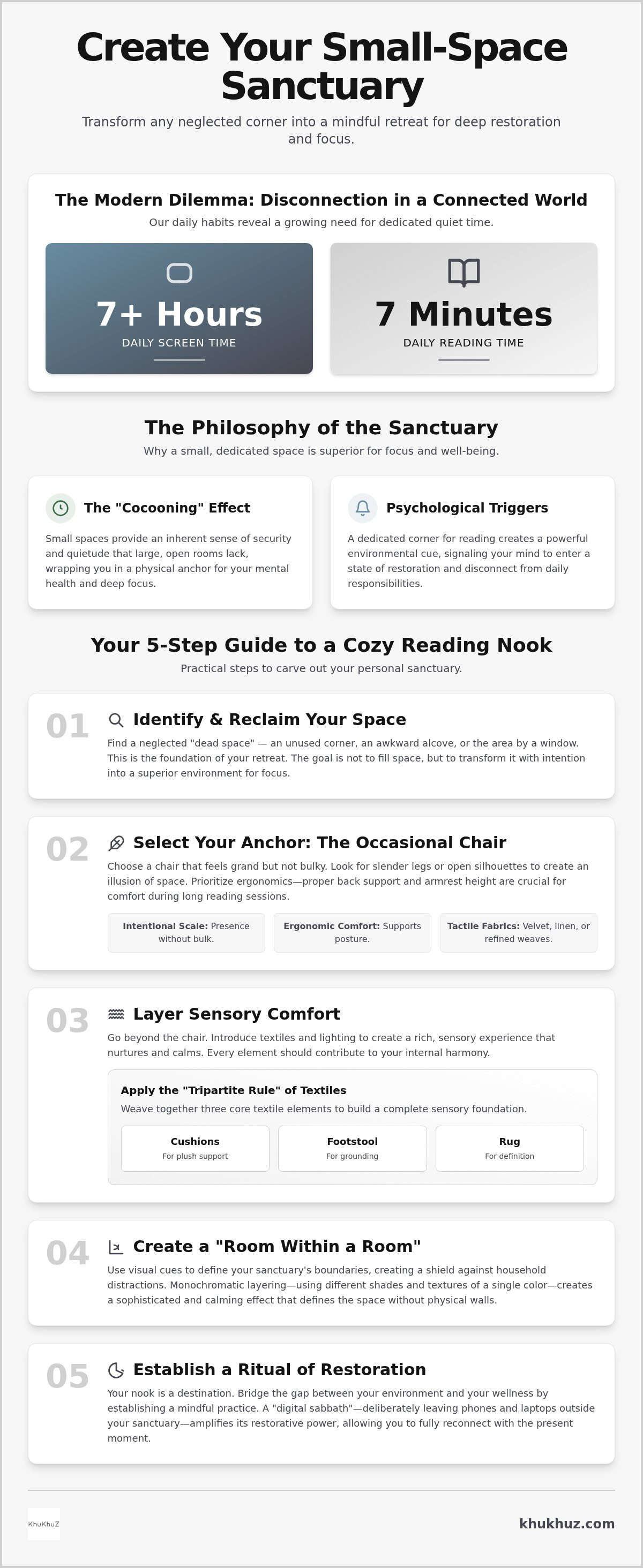
With the average person spending over seven hours on screens but only seven minutes reading each day, a dedicated space for quiet reflection has never been more essential for our collective wellness. You likely feel that your limited square footage makes creating a cozy reading nook in a small space feel like an impossible dream, especially when you're already overwhelmed by a cramped layout. It's difficult to disconnect from household distractions when you don't have a place that feels entirely yours, curated for your comfort and your peace.
This restorative sanctuary is entirely achievable when you approach your environment with intention and a refined eye for functional beauty. By turning a neglected corner into a mindful retreat, you can cultivate a sense of home-based harmony that nourishes your mind, body, and spirit. This guide will show you how to select an elegant occasional chair, layer sensory comfort with plush cushions, and optimize every inch of your home for deep restoration. You'll discover practical steps to carve out a sanctuary where you can breathe, reflect, and rediscover your equilibrium.
Key Takeaways
- Reclaim neglected corners by identifying "dead space" that can be transformed into a superior environment for deep focus and internal restoration.
- Select an occasional chair with intentional scale and proportion to anchor your retreat; this ensures your furniture feels grand yet never bulky.
- Master the art of creating a cozy reading nook in a small space by applying the "Tripartite Rule" of textiles to weave together cushions, footstools, and rugs.
- Utilize monochromatic layering and soft boundaries to define a "room within a room," creating a visual and emotional shield against everyday household distractions.
- Establish a digital sabbath ritual within your sanctuary to bridge the gap between your external environment and your journey toward holistic wellness.
The Philosophy of the Small-Space Sanctuary
A reading nook is far more than a simple arrangement of furniture; it's a curated boundary that protects your inner peace. While many view limited square footage as a constraint, the reality is that small spaces are inherently superior for deep focus. They provide a "cocooning" effect that large, open rooms often lack, wrapping you in a sense of security and quietude. When you begin the journey of creating a cozy reading nook in a small space, you are essentially designing a physical anchor for your mental health. This process requires a shift in perspective, moving away from mere clutter management and toward intentional curation. Every object in your sanctuary should serve your well-being, reflecting the harmony you seek within yourself.
The Psychological Benefit of a Dedicated Retreat
The human brain thrives on environmental cues. When you establish a specific corner for reading, you create a powerful psychological trigger that signals the mind to enter a state of restoration. This "third space" at home acts as a bridge between your external responsibilities and your internal equilibrium. It's a place where the world slows down, the noise fades, and your spirit finds room to expand. Even a single square meter, when treated with reverence, can serve as a profound sanctuary. It becomes a ritualistic destination that invites you to leave behind the distractions of the digital world and reconnect with the present moment. If you cultivate this space with care, then it will naturally nurture your capacity for mindfulness and self-reflection.
Setting Your Intention for the Space
Before selecting a single textile or accent, you must define the purpose of your retreat. Is your nook intended for rigorous intellectual study, a light escape into fiction, or perhaps a meditative silence? This intention dictates every aesthetic choice you make, from the depth of the color palette to the firmness of the seating. A wise mentor understands that external beauty and internal well-being are inextricably linked. For instance, understanding The Art of the Occasional Chair and the tactile nature of different fabrics allows you to select pieces that feel restorative rather than merely functional. Your chosen corner should feel purposeful and composed, acting as a testament to your commitment to a more balanced life. By choosing a specific spot with clear intent, you transform a neglected corner into a visionary advocate for your personal growth.
Ultimately, the philosophy of the small-space sanctuary is rooted in the belief that our homes should be reflections of our highest selves. It's about creating a cozy reading nook in a small space that doesn't just house books, but houses your soul. Through rhythmic design and intentional placement, you can turn the smallest footprint into a grand expression of internal harmony.
Selecting the Anchor: The Art of the Occasional Chair
The occasional chair serves as the singular most important investment when creating a cozy reading nook in a small space. It's the physical manifestation of your intention, the structure for your rest, and the boundary of your sanctuary. Selecting the right piece requires a delicate balance of scale and proportion. You want a chair that possesses a grand presence but lacks the bulk that suffocates a room. Pieces with slender legs or open silhouettes allow light to pass through, creating an illusion of space while providing a solid foundation for your body. By focusing on the harmony between scale and comfort, creating a cozy reading nook in a small space becomes an exercise in self-care and aesthetic precision.
Ergonomics play a vital role in the longevity of your reading sessions. Proper back support ensures your spine remains aligned, while armrest height should allow your elbows to rest naturally as you hold your book. This prevents the physical tension that often disrupts a mindful state. When selecting fabrics, look for textures that evoke quiet confidence and luxury. A soft velvet, a refined weave, or a breathable linen can transform a simple seat into a tactile experience that nurtures the senses. This attention to detail is part of Layering for Comfort: Textiles, Light, and Essence, ensuring every element contributes to your internal harmony.
Pairing with a Footstool for Total Equilibrium
A footstool is not merely an accessory; it's a tool for physical and energetic grounding. Elevating your feet encourages circulation and signals to the nervous system that it's time to settle. In a compact environment, versatility is essential. Your footstool can serve as extra seating for a guest, a stable surface for a tea tray, or a supportive rest for your legs. If you want to master this balance, you can learn How to Style a Footstool: A Guide to Your Sanctuary to ensure it integrates seamlessly with your chair. This pairing creates a sense of completeness that makes the smallest corner feel like a finished room.
The Aesthetic of the Occasional Chair
Whether you prefer modern silhouettes versus classic comfort, your chair should act as the visual anchor for the entire space. A modern, minimalist frame offers a clean stylistic center. A more traditional, high-back design provides a sense of protective enclosure. Choosing a high-end occasional chair is a visionary choice for small-space living because it prioritizes quality over quantity. It's an investment in your daily ritual of restoration. If you choose a piece that resonates with your personal aesthetic, then the nook becomes a true reflection of your inner self. You might find that our collection of occasional chairs offers the perfect blend of elegance and support for your new retreat.
Layering for Comfort: Textiles, Light, and Essence
Once you have anchored your sanctuary with the perfect chair, the next step is to breathe life into the space through intentional layering. This is where the Tripartite Rule of textiles becomes essential for creating a cozy reading nook in a small space. By grouping a single cushion, a soft throw, and a textured rug, you create a sense of completeness, stability, and warmth. These elements don't just provide comfort; they define the physical boundaries of your retreat, signaling to your brain that you have entered a zone of restoration. Using monochromatic layering allows you to create a room within a room through varying textures rather than jarring colors. This approach is vital because it maintains visual harmony while offering the sensory depth your spirit craves.
Cushions play a dual role in your sanctuary, offering both physical adjustment and aesthetic softness. They allow you to fine-tune your posture, ensuring that your body feels supported as your mind wanders through the pages of a book. Beyond the tactile, consider the invisible decor of your nook. Integrating scent and sound can deepen your sense of peace. A subtle essential oil or the soft hum of a white noise machine can act as a shield against household distractions, helping you maintain your internal equilibrium. If you choose textures that resonate with your personal style, then the space will naturally become a visionary advocate for your daily well-being.
Luminal Intention: Lighting Your Sanctuary
Lighting is the soul of any restorative space. There is a profound difference between task lighting, which illuminates the text, and the ambient glow that settles the nervous system. For evening reading, warm-toned lighting is essential; it mimics the soft hues of twilight and prepares the body for a restful night. If you can, position your nook near a window to take advantage of natural light. This allows for daytime sun-bathing while you read, grounding your experience in the natural rhythms of the world. The right light doesn't just help you see; it helps you feel at peace, composed, and ready for deep reflection.
Curating Your Cushion Collection
Curating your accessories is an act of self-expression and care. Mixing textures like velvet, linen, and silk creates a sensory experience that invites you to linger. We recommend the Rule of Three for cushion arrangement in a small chair to ensure the space feels curated rather than cluttered. One large base cushion, one smaller accent piece, and a focused lumbar support create a balanced and inviting silhouette. For those looking to elevate their environment, our perspective on Refined Accents: Accessorizing for the Holistic Life provides a roadmap for choosing pieces that resonate with your journey toward a more aesthetic existence. Creating a cozy reading nook in a small space is ultimately about these small, intentional choices that lead to a more balanced and restorative life.
Spatial Alchemy: Transforming Neglected Corners
Spatial alchemy is the art of seeing potential where others see only limitation. When creating a cozy reading nook in a small space, your first task is identifying 'dead space' that currently serves no purpose, such as a quiet bedroom corner or the area beneath a staircase. Once you have found your spot, step two involves defining clear boundaries. While rugs provide tactile comfort, they also serve as a visual frame that separates your sanctuary from the rest of the home. You might also use low shelving to create a physical partition; this provides a sense of enclosure while maintaining a graceful, open flow.
Step three focuses on vertical optimization for your library. Floating shelves draw the eye upward and keep the floor clear, which is essential for maintaining a sense of expanse. If you prefer floor stacks, keep them intentional and limited to your current 'to-read' list. Finally, perform a minimalist edit by removing any object that does not contribute to your restoration. A light, uncluttered environment allows your mind to expand, your heart to soften, and your spirit to breathe. You can begin this transformation by exploring our occasional chairs, designed to bring elegance to even the most compact corners.
The Window Nook: Harnessing Natural Energy
Positioning your chair next to a window requires careful styling to ensure you don't block the light or the view. There is a profound psychological benefit to 'view-prospect,' the feeling of looking out at the world while feeling safe and sheltered within your home. To preserve your books and your comfort, ensure they are shielded from direct sunlight. Use light-filtering curtains to manage glare, block drafts, and maintain a consistent temperature for your restorative sessions. This setup encourages a rhythmic connection between your internal state and the natural world outside.
The Closet Conversion: A Hidden Sanctuary
If you have a spare closet, consider removing the doors to create an elegant alcove effect. This hidden sanctuary can be defined by a bold paint color or a curated wallpaper, creating a distinct world within your walls. Because these spaces are often dark, integrated LED strips or battery-operated sconces provide the necessary glow without requiring complex wiring. It turns a simple storage area into a visionary advocate for your peace, your privacy, and your internal harmony. By creating a cozy reading nook in a small space like this, you reclaim your home as a partner in your wellness journey.
The Ritual of Restoration: Mindful Reading Practices
The physical act of creating a cozy reading nook in a small space is merely the beginning of your journey toward internal harmony. While the right furniture and textiles provide the foundation, the true power of the sanctuary lies in how you inhabit it. To transform this corner into a tool for mental health, you must establish a clear boundary between the noise of the world and the stillness of your retreat. A vital component of this practice is the "Digital Sabbath." By making your nook a strictly phone-free zone, you allow your nervous system to fully decompress without the constant pull of notifications or blue light. This intentional disconnect creates the space necessary for deep, restorative engagement with your chosen text.
Establishing a specific "Nook Ritual" further signals to your brain that it is time to transition into a state of peace. This might involve a simple tripartite sequence: brewing a cup of herbal tea, lighting a scented candle, and taking three deliberate breaths before opening your book. These small acts of self-care ground your physical body and prepare your mind for the immersive experience ahead. If you treat this time as a sacred appointment with yourself, then the sanctuary becomes a visionary advocate for your daily equilibrium. It moves beyond being a decorative feature and becomes a vital partner in your holistic lifestyle.
Reading as a Form of Distance Healing
Immersive reading mirrors the profound effects of meditation, slowing the heart rate and quieting the mental chatter that often accompanies modern living. A curated environment plays a significant role in this process, as a balanced space has been shown to reduce cortisol levels and encourage a sense of safety. Pairing your reading practice with Holistic Mental Health Therapy: A Visionary Guide allows you to integrate your external environment with your internal growth. This integrated approach ensures that your home-based wellness journey is both grounded in physical comfort and elevated by spiritual intention.
Maintaining the Sanctuary
To keep the energy of your retreat fresh and inviting, the "Daily Reset" is essential. This involves smoothing the throw, plumping the cushions, and clearing away any items that don't belong in your sanctuary. As the seasons shift, consider rotating your accessories to reflect the natural world outside. A lighter linen throw for summer or a deeper velvet cushion for winter keeps the space feeling dynamic and aligned with the earth's rhythms. Creating a cozy reading nook in a small space is an ongoing act of love. Your home is a reflection of your soul; curate it with the same care and intention you bring to your own self-actualization. When you nurture your environment, you are ultimately nurturing your highest self.
Begin Your Journey Toward Internal Harmony
Your environment serves as a mirror to your soul; every intentional choice you make within your walls ripples through your internal state. We've explored the transformative power of creating a cozy reading nook in a small space, from the ergonomic support of an occasional chair to the restorative silence of a digital sabbath. By reclaiming neglected corners and layering them with sensory depth, you've designed more than just a place to sit. You've built a sanctuary that nurtures your growth, honors your need for stillness, and reflects your commitment to a balanced life.
As you move from vision to reality, remember that every piece of furniture should act as a visionary advocate for your peace. You can find the perfect foundation for your retreat by browsing the KhuKhuZ Fashion & Lifestyle Occasional Chair Collection. These curated designs offer the sophisticated silhouettes and high-end comfort necessary for deep, mindful restoration. Your journey toward holistic harmony begins with a single, intentional corner where you can breathe, reflect, and simply be.
Frequently Asked Questions
How much space do I actually need for a reading nook?
You can successfully begin creating a cozy reading nook in a small space with as little as one square meter of floor area. This compact footprint is sufficient to accommodate a refined occasional chair and a small side table or footstool. By focusing on the intentional placement of your furniture, you can transform even the narrowest corner into a visionary advocate for your daily restoration and peace.
What is the best chair for a small-space reading nook?
The ideal choice for a compact retreat is a sophisticated occasional chair that offers a slender silhouette and tapered legs. These design features allow light to flow underneath and around the piece, which prevents the room from feeling heavy or overcrowded. If you select a chair with a supportive back and comfortable armrests, then you ensure that your physical body remains grounded during long, immersive reading sessions.
Can I create a reading nook in a bedroom without it feeling cluttered?
Creating a reading nook in a bedroom is entirely possible without adding clutter if you utilize vertical space and maintain a minimalist edit. By placing your chair in a corner and using floating shelves for your books, you keep the floor clear and the energy of the room light. Defining the area with a small rug helps to frame the sanctuary as a distinct zone of rest, separate from your sleeping area.
How do I light a reading nook if there are no electrical outlets nearby?
You can illuminate your sanctuary using rechargeable LED lamps or battery-operated wall sconces if electrical outlets are unavailable. These modern solutions provide the warm, ambient glow necessary for evening restoration without the need for complex wiring or unsightly cords. Positioning your nook near a window also allows you to harness natural light during the day, which supports your circadian rhythms and enhances your sense of well-being.
What are some budget-friendly ways to make a reading nook feel cozy?
You can enhance the comfort of your nook by repurposing high-quality textiles like linen throws or velvet cushions you already own. Focus on the intentional arrangement of these items to create a sense of sensory depth and luxury. Simple acts like placing a single potted plant or a scented candle nearby can elevate the atmosphere of the space without requiring a significant financial investment.
How do I choose the right color palette for a relaxing reading space?
Selecting a palette of warm earth tones, soft greens, or gentle blues will foster a state of quiet confidence and internal harmony. These colors are known for their ability to lower cortisol levels and create a serene environment for deep reflection. If you use monochromatic layering, then you can create a sophisticated "room within a room" effect that feels both expansive and protective.
Should I use a rug in my reading nook?
A rug is a vital component when creating a cozy reading nook in a small space because it acts as a physical and visual anchor. It provides the tactile grounding your feet need to signal the body that it is time to settle and rest. Beyond comfort, a rug defines the boundaries of your sanctuary, ensuring that your retreat feels like a complete and intentional destination within your home.
How do I organize books in a very small reading corner?
Vertical optimization is the most effective way to organize books in a restricted area without sacrificing floor space. Floating ledges or tall, narrow bookcases allow you to display your collection as a form of self-expression while keeping the layout open. Limit the books in your nook to your current "to-read" list to maintain a minimalist environment that encourages focus rather than distraction.